



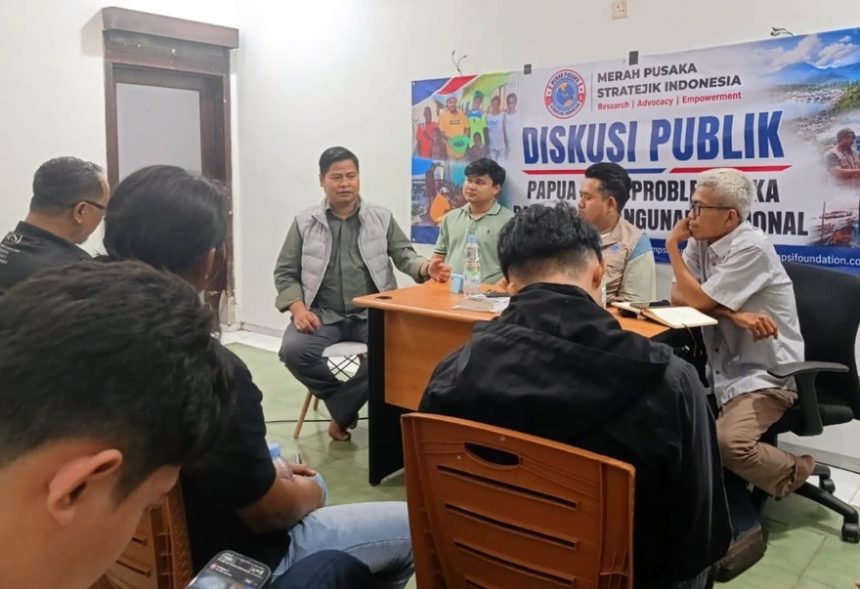
Jakarta – Resolving various issues in Papua requires a comprehensive approach that prioritizes dialogue, data-based policies, and development tailored to the characteristics of the local community, said Rasminto, an academic from the University of Muhammadiyah Indonesia, in a public discussion titled “Papua in the Problems of National Development” in Jakarta.
According to Rasminto, Papua is a region with highly complex development, encompassing geography, cultural diversity, human resource quality, governance, public services, and security dynamics. Therefore, resolving issues in Papua cannot be achieved through a single approach but must consider various interrelated factors.
He believes that the success of development in Papua is not determined by the intensity of political debate, but rather by the ability to present policies that are data-based, sensitive to community needs, and consistent in their implementation on the ground. Policies that are formulated without understanding the root causes of the problem have the potential to have less than optimal impact on the community.
Rasminto also appreciated the government’s continued commitment to prioritizing Papua as a national development priority through infrastructure development, strengthening education and health services, empowering the community’s economy, and implementing various National Strategic Projects (PSN). He believed this policy direction was on the right track, as it aimed to reduce the development gap between Papua and other regions in Indonesia.
However, he emphasized that development success must be measured by the tangible benefits felt by the community. The substantial development budget, including the Special Autonomy Fund, needs to be balanced with effective governance, oversight, and program implementation to sustainably improve community welfare.
Furthermore, Rasminto stated that Papua has hundreds of ethnic groups, regional languages, and customary territories, which require an adaptive development approach. Policies that are successful in one region may not be effective in another, so the government needs to strengthen planning that takes into account the social, cultural, and real needs of the local community.
This view aligns with the various advocacy groups that prioritize dialogue as a crucial component of conflict resolution and development in Papua. The National Commission on Human Rights (Komnas HAM), for example, encourages humanitarian dialogue involving the government, religious leaders, indigenous communities, and civil society to build trust and create conditions conducive to community protection.
With an inclusive, data-driven, and community-focused approach, development in Papua is expected to not only produce physical progress but also strengthen the welfare, stability, and public trust in the ongoing development process.