



Wamena – The Bung Karno–style People’s School (Sekolah Rakyat/SR) is set to be promoted in remote areas of Papua Highlands Province. The learning concept applies Bung Karno’s letter method, which focuses on five vowels—A, I, U, E, and O. This initiative is being driven by the Papua Highlands chapter of the Indonesian Foundation for Supporting Efforts to Eradicate Illiteracy (Yayasan Bantulah Usaha Pemberantasan Buta Huruf Indonesia – YBUPBHI).
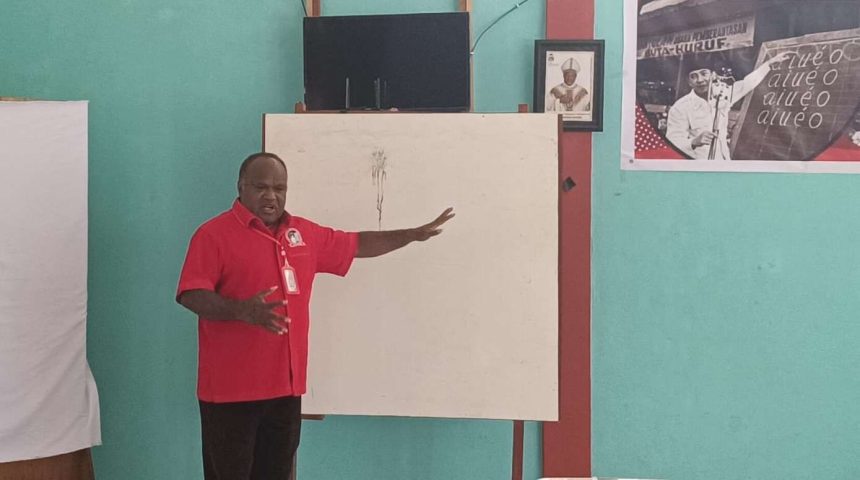
To support this effort, YBUPBHI held a training program for teachers of the Bung Karno Letter People’s School in Wamena, Jayawijaya Regency, on Saturday (January 24, 2026). The training was attended by several People’s School teachers, particularly those from the outskirts of the city or education zones 3 and 4, which serve as the main bases of YBUPBHI’s People’s School program.
“Today’s activity aims to provide training by trainers to teachers who teach at People’s Schools. These teachers work in reference villages that we have identified based on Jams Modouw’s four education zones,” said Bertus Asso, S.Pd., M.Pd., Director of YBUPBHI Papua Highlands.
According to Asso, the Bung Karno learning method based on the five vowels—A, I, U, E, and O—serves as the main foundation for developing People’s Schools in Papua Highlands. He emphasized that the nation originates from history shaped by its predecessors, and therefore learning methods should also follow those historical footprints.
“Everything begins from the history initiated by our predecessors, so that today we can feel and enjoy its outcomes. I am the developer of the method using the five vowels taught by the Proclamator, Bung Karno. These five letters become a driving force for education,” said Asso, who is also the author of a book on the Bung Karno letter method.
Asso explained that the People’s School concept promoted through YBUPBHI operates in remote and rural areas. He said this People’s School is an adoption of the concept once implemented by Bung Karno in Madiun shortly after the proclamation of Indonesian independence.
“This is what I am now implementing in Papua Highlands, and I hope its influence will reach all remote areas and other parts of Indonesia. This People’s School was originally initiated by the Proclamator himself, and the archives are preserved at the National Archives of the Republic of Indonesia,” said Bertus Asso, who also serves as the Third Deputy Speaker of the Papua Highlands Regional House of Representatives (DPRP).
“This is what the trainers will later convey to the teachers we have prepared—how the Proclamator carried it out authentically. I too move forward authentically, without assistance from anyone. I continue to push forward and keep moving, and thankfully it has now developed in several regencies,” Asso added.
On the other hand, he stated that the People’s School program currently being promoted by Indonesian President Prabowo Subianto should be grounded in Bung Karno’s original People’s School learning methods. Therefore, he argued that current People’s School policies need to be revised.
“The People’s School must refer back to the founding father of the nation. It is more effective and must return directly to the people, just as Bung Karno did. In essence, I want to convey that I am the extension of Bung Karno’s voice in the field of education,” he concluded.