



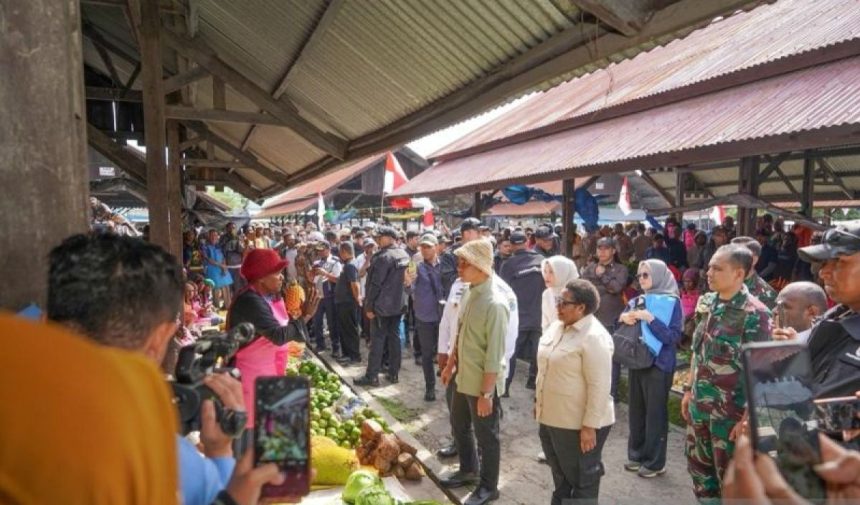
Wamena, Papua Highlands — Indonesia’s Ministry of Home Affairs (MoHA) has urged the Papua Highlands Provincial Government, along with district administrations, to immediately formulate a food needs master plan as a strategic effort to strengthen food security in the highland region.
The initiative comes amid the region’s continued reliance on food supplies from outside Papua Highlands, a condition that has contributed to price disparities and limited availability of basic food commodities. MoHA considers the preparation of a comprehensive master plan crucial to ensuring sustainable and long-term food security.
Deputy Minister of Home Affairs Ribka Haluk emphasized that the master plan must be carefully designed and based on local potential.
“Papua Highlands has abundant natural resources. What is needed now is proper planning so the region does not remain dependent on external food supplies,” Haluk said.
She explained that the plan should
cover short-, medium-, and long-term strategies, including agricultural land mapping, identification of priority commodities, and strengthening supporting infrastructure across the eight districts in Papua Highlands.
According to Haluk, strong involvement from both local governments and local communities is essential to achieving food self-reliance.
“Regional governments must encourage communities to cultivate and manage agricultural land sustainably so that food needs can be met locally,” she added.
MoHA also stressed that the formulation of the food master plan must align with national food security policies and the directive of the President of the Republic of Indonesia to achieve food self-sufficiency, particularly in newly established autonomous regions.
With comprehensive planning and cross-sector collaboration, the Ministry of Home Affairs remains optimistic that Papua Highlands will be able to enhance food self-reliance, reduce price disparities, and improve public welfare in a sustainable manner.