




CENTRAL PAPUA, Indonesia — The Central Papua Provincial Government is strengthening efforts to expand access to healthcare by increasing enrollment in Indonesia’s National Health Insurance (JKN) program.
The initiative reflects the provincial government’s commitment to ensuring that healthcare services are accessible to communities across Central Papua, including those living in remote areas and villages.
As part of the province’s priority programs, the Central Papua Government is working with district administrations to improve equitable access to healthcare services throughout the region.
As of August 1, 2026, JKN coverage in Central Papua had reached 117.06 percent, while the proportion of active participants stood at 95.82 percent.
Deputy Director of BPJS Health Region XII Benjamin Saut PS, represented by Assistant Deputy for Health Service Coverage Hasbiyas Siddik Alhudawi, praised the commitment of the Central Papua Provincial Government and district governments to expanding JKN coverage.
He said 50,000 active JKN participants had been registered through collaboration with the Special Autonomy New Hope Health Card–National Health Insurance program, known as Koharussehat-JKN, in Central Papua.
“The number is divided into 44,720 Indigenous Papuans (OAP) and 2,679 non-OAP participants, with total funding allocation of approximately Rp22.7 billion,” Hasbi said in a press release obtained by TribunPapuaTengah.com on Monday (August 17, 2026).
Hasbiyas said the national JKN program currently provides around two million healthcare services every day.
In Central Papua, approximately 267,000 participants have access to first-level healthcare facilities, including community health centers, primary clinics, independent medical practices and primary regional hospitals.
Meanwhile, hospitals across the province’s eight districts handle around 28,000 cases each year.
“As of July 2026, the realization of healthcare service costs under the JKN program in Central Papua had reached Rp124.8 billion,” he said.
As participation continues to grow, BPJS Health is also expanding innovations designed to make healthcare administration and services more accessible, particularly for communities affected by the province’s challenging geography.
“Yes, through face-to-face services as well as Mobile JKN, WhatsApp Administration Services (PANDAWA) and Virtual Office Participant Services (VIOLA), which reach communities down to the village level,” Hasbiyas explained.
Central Papua Governor Meki Mawipa emphasized that access to health insurance is a fundamental right for every citizen.
He said healthcare programs must reach communities directly and be implemented through strong cooperation between provincial and district governments.
“Our commitment to providing health protection is also realized through the Koharu Sehat program. This program is a concrete form of the Central Papua Provincial Government’s efforts to ensure that communities, particularly Indigenous Papuans, have access to healthcare services,” Nawipa said.
According to him, Koharu Sehat and JKN should not be viewed as separate programs. Instead, both initiatives can complement each other in strengthening health protection for the people of Central Papua.
“The JKN program serves as the foundation for JKN protection, while Koharu Sehat is a form of regional support and policy tailored to the needs and characteristics of the people of Central Papua,” he said.
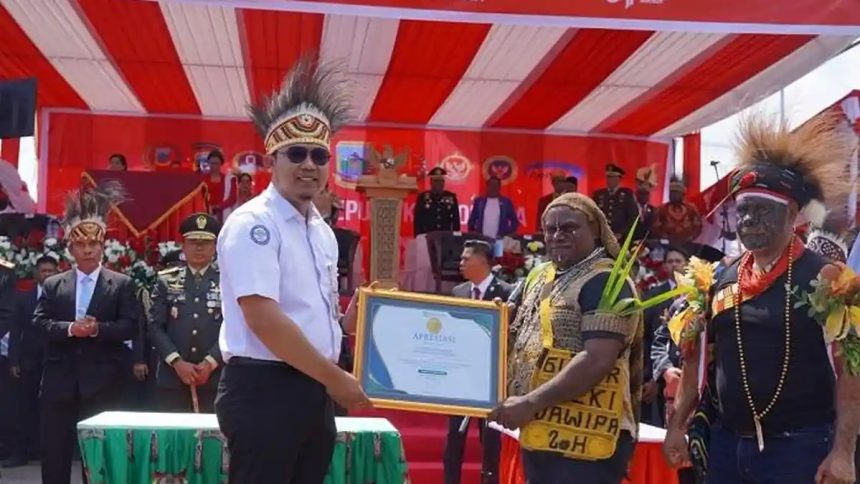
The province’s collaboration in expanding health coverage has also received national recognition from the Indonesian central government through the Universal Health Coverage (UHC) Award in the main category. Central Papua has maintained its UHC status to date.
Nawipa said the provincial government’s goal was not simply to increase the number of people registered with health insurance, but to ensure that residents could actually access quality healthcare when they needed it.
“We hope that the people of Central Papua will not only have health insurance coverage, but will also truly have access to healthcare services that are easy, fast and of high quality when they need them,” Nawipa concluded. (*)