



WAMENA – The Papua Pegunungan Provincial Government, through its Department of Education and Culture, has reaffirmed its commitment to closely oversee the Free Nutritious Meal Program (MBG) to ensure it delivers optimal benefits for children across the mountainous region of Papua. Supervision is being carried out in coordination with the Nutrition Fulfillment Service Unit (SPPG) as a moral and administrative responsibility toward the younger generation.
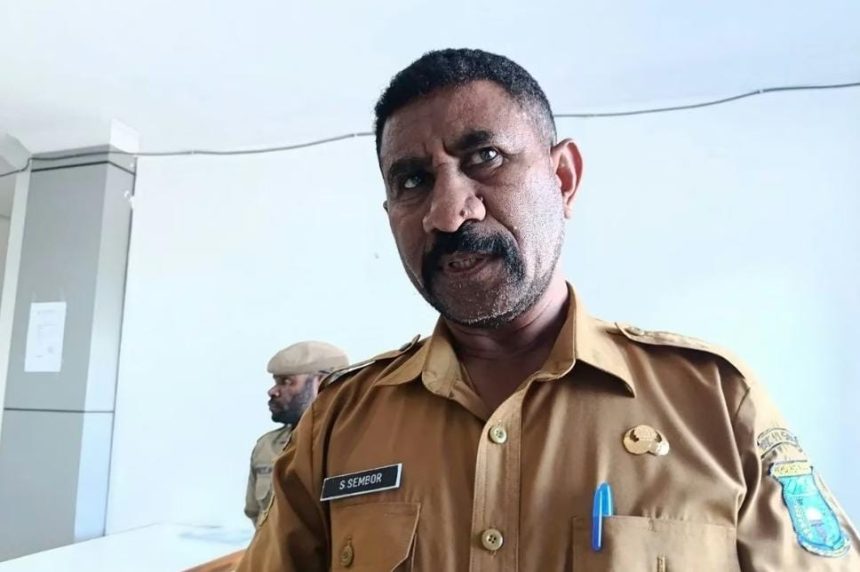
Acting Head of the Papua Pegunungan Education and Culture Office, Simon Sembor, stated that a program evaluation was conducted last year in coordination with the Ministry of Home Affairs through an online meeting. Following the coordination, local governments were instructed not only to serve as implementers but also as active supervisors in the field.
“We do not want a program that addresses the basic needs of children to run without proper control. Both provincial and district governments must be present to ensure that every meal distributed is truly healthy, hygienic, and nutritious,” he emphasized in Wamena on Saturday.
He stressed that supervision must be comprehensive, covering everything from MBG kitchens to the distribution process. Local governments are expected to regularly conduct field inspections to assess kitchen conditions, hygiene standards, food quality, and ensure the inclusion of local food products to support the local economy.
This approach, he added, is not merely administrative but also human-centered. According to Simon, the meals consumed by school children are not simply assistance—they are an investment in the future of Papua Pegunungan.
“Every raw ingredient must have a clear origin. If fish is supplied from Biak, we must ensure who caught it, how it was cleaned, how it was stored in cool boxes, how it was transported to Wamena, and how it was processed in the MBG kitchen. Quality and freshness must be guaranteed at every stage,” he explained.
He underscored that supervision must be carried out from upstream to downstream, with no compromise on health and food safety standards. The local government also ensures that cooked meals are distributed within a strict time frame.
“In accordance with the Ministry of Home Affairs’ directive, meals that have been cooked must be distributed and consumed within a maximum of four hours. This is to maintain nutritional quality and food safety,” he said.
Through firm oversight combined with a human-centered approach, the Papua Pegunungan Provincial Government hopes the MBG Program will not only succeed administratively but also truly reflect the state’s presence in ensuring that Papuan children grow up healthy, strong, and ready to build the future of their region.