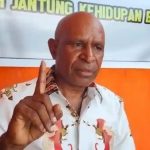





Jakarta – Deputy Minister of Home Affairs (Wamendagri) Ribka Haluk emphasized that the Special Autonomy (Otsus) policy is the government’s primary instrument in accelerating the welfare of Indigenous Papuans (OAP). This is achieved by granting broad authority to regional governments (Pemda), particularly in encouraging more specific and targeted innovations in public services.
According to Ribka, Otsus is not simply a budget transfer, but rather a state mandate to provide space for affirmation and protection of the basic rights of indigenous peoples, while simultaneously strengthening the role of regions in development in various strategic sectors.
“The essence is how the government, in this case, the central government, grants the greatest and broadest possible authority to regional governments. Within this special autonomy framework, regional governments can provide public services, specifically with affirmative action for indigenous Papuans,” Ribka said in a statement on Tuesday (January 27, 2026).
Ribka conveyed this during a talk show session on the Affirmative Action Policy for Papua’s Special Autonomy for the Welfare of Indigenous Papuans at the Nusantara TV (NTV) Studio in Jakarta on Tuesday (January 27th).
Ribka explained that the central government has provided a strong regulatory foundation to support this affirmative action policy. This is realized through the establishment of various specialized regional institutions and the strengthening of the role of cultural and political representation institutions unique to the Papua region.
“So, the central government has issued regulations and then implemented affirmative action, such as the establishment of regional institutions such as the People’s Consultative Assembly (MRP), the Regional People’s Representative Council (DPRP), the Regional People’s Representative Council (DPRK). There are numerous affirmative actions in education, health, infrastructure, and even in public authority, such as the affirmative action protection for governors, which requires indigenous Papuans,” she continued.
Furthermore, Ribka revealed that the Special Autonomy protection policy also touches on aspects of the people’s economy, so that indigenous Papuans are not merely objects of development but play a key role in the development process in their own regions.
This policy transformation has continued to evolve since the enactment of the Special Autonomy Law in 2001, which initially covered only one parent province and has now expanded to six provinces in Papua to improve service delivery and accelerate equitable development.
“This means the government has granted regional governments the broadest possible authority to innovate to accelerate the welfare of indigenous Papuans,” stated the former Acting Governor of Central Papua.
For your information, the implementation of Special Autonomy for Papua has entered a new phase following regulatory changes through Law Number 2 of 2021. The central government continues to encourage synchronization between provincial and district/city governments so that the granted special authority can be translated into concrete programs that directly benefit communities in remote areas of Papua.
The discussion was also attended by Velix Vernando Wanggai, Chair of the Papua Special Autonomy Executive Committee for Development Acceleration (KEPP), and South Papua Governor Apolo Safanpo.