



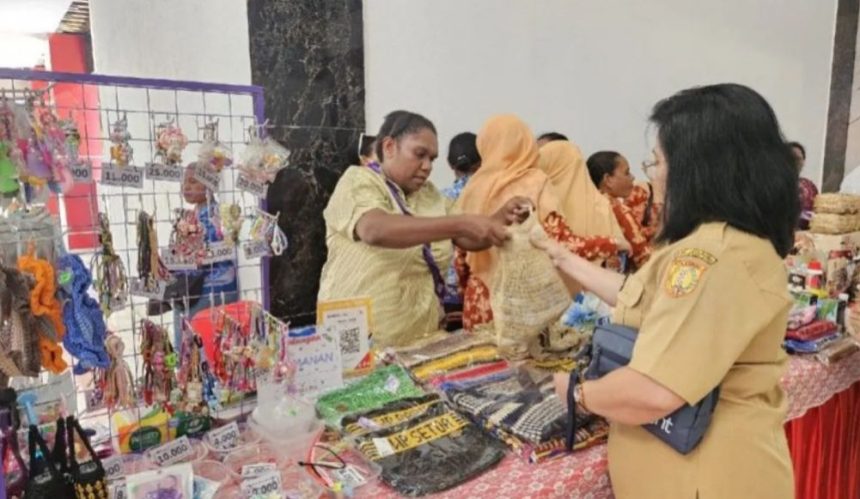
Jayapura — Behind woven noken bags, carved wooden artworks, and distinctive decorative patterns from Papua’s coastal and highland regions lie the hands of indigenous Papuan communities who faithfully preserve their ancestral heritage. The Regional National Crafts Council (Dekranasda) of Papua Province has recorded 1,169 micro, small, and medium enterprises (MSMEs) engaged in culture-based handicrafts across eight regencies and one city in the Land of the Cenderawasih.
Chairperson of Dekranasda Papua Province, Ra’Fatul M. Fakhiri, stated that Papuan handicrafts are rooted in tradition, customary values, and the close relationship between the people and nature. Beyond their economic role, these crafts function as a medium for passing cultural heritage from one generation to the next.
“Papuan handicraft industries grow out of indigenous customs and local wisdom. Each piece carries a story, identity, and high artistic value. Most artisans are Papuan women—known as Mama-Mama Papua—and local craftsmen who keep these traditions alive,” she said in Jayapura on Wednesday.
The distribution of these handicraft MSMEs reflects the cultural richness across Papua’s regions. Biak Numfor Regency records the highest number with 325 MSMEs, followed by Yapen Islands Regency with 261 active enterprises. Both areas are known for strong traditions in marine-inspired motifs, natural fibers, and distinctive coastal carvings.
Meanwhile, Jayapura Regency is home to 130 MSMEs, while Jayapura City contributes 159 MSMEs operating across various handicraft subsectors, including weaving, traditional accessories, and crafts based on indigenous symbols.
Other regions include Waropen Regency with 120 MSMEs, Keerom Regency with 69, and Supiori Regency with 60. Sarmi Regency has 35 MSMEs, while Mamberamo Raya Regency records the lowest number at nine MSMEs, largely due to limited access and production infrastructure.
Ra’Fatul emphasized that these handicraft MSMEs carry strong social significance, particularly for Mama-Mama Papua, for whom handicrafts serve as a space for empowerment, household economic independence, and the preservation of cultural identity.
“Dekranasda will continue to actively support and develop local artisans so that Papuan handicrafts not only survive, but grow sustainably without losing their indigenous values,” she said.
Through ongoing mentorship and market development, Dekranasda Papua hopes local handicrafts will be recognized not merely as cultural products, but as symbols of the social resilience of Papuan communities—rooted in tradition and collective solidarity.