



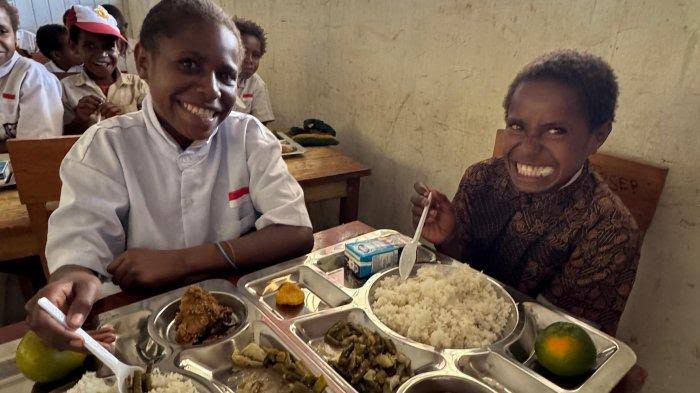
Papua, Indonesia — Indonesia’s government initiative, the Free Nutritious Meal Program (MBG), is earning praise from local leaders in Papua, who view it as a vital step toward improving public health and human capital development in the country’s easternmost provinces.
The program, aimed primarily at school-aged children, is designed to address longstanding challenges related to malnutrition and food insecurity among indigenous Papuans, particularly in remote areas.
Ismail Ulof, tribal chief of the Elseng community in Skanto District, Keerom Regency, expressed optimism that the program would soon be implemented in his region. He emphasized the importance of adequate nutrition for the younger generation, many of whom still struggle to access proper meals due to geographic and economic constraints.
“We hope the MBG program will be introduced in Keerom soon, especially in Skanto District. It’s essential for our children to receive proper nutrition so they can grow healthy and strong. Well-nourished children will be better prepared to face the future and become competitive,” said Ulof.
He also highlighted the need for the program’s continuity beyond a single political term, arguing that sustained implementation would yield greater long-term benefits, especially in shaping the character and competitiveness of Papua’s youth. Ulof further endorsed the government’s broader efforts to improve education and vocational skills in the region.
Similar sentiments were echoed by Billy Kreuw, chief of the Manirem tribe in Keder Village, East Sarmi District, where the MBG program has already begun to take effect.
“The program has been very helpful for our children. They are receiving the nutrition they need, which supports both their education and physical development. We truly hope the program continues and expands,” Kreuw stated.
He called on all segments of society to support people-centered policies such as MBG, particularly those addressing economic, social, and cultural welfare. Kreuw also pledged to encourage other indigenous communities to get behind initiatives that directly benefit the Papuan people.
The endorsement of MBG by tribal leaders underscores the program’s relevance and effectiveness in addressing real-world needs. With active community participation, stakeholders hope the initiative will contribute to lasting change and foster a healthier, more resilient generation in Papua.